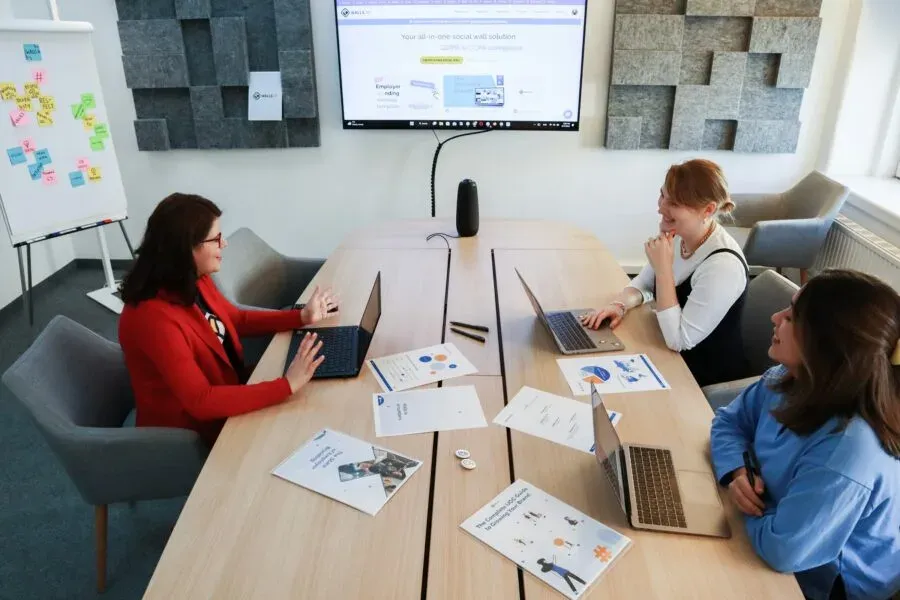
Using AI to Measure Communication and Leadership Skills
AI systems can analyze communication patterns across multiple channels, including video interviews, meetings, presentations, emails, and chat interactions.
New: measure the carbon your hiring saves — try the Sustainability Impact Calculator

Gabrielle Martinsson is a Content Writer at Interviewer.AI. She’s a tech geek and loves optimizing business processes with the aid of tech tools. She also loves travelling and listening to music in her leisure.
AI systems can analyze communication patterns across multiple channels, including video interviews, meetings, presentations, emails, and chat interactions.
AI powered recruitment tools are transforming how staffing companies source, screen, evaluate, and engage candidates.
In this blog, we’ll explore how AI video interviews function, the technology behind them, and why universities are increasingly using them to evaluate students.
Today, AI is playing a major role in helping colleges and universities evaluate candidates more efficiently, objectively, and at scale. From automated video interviews to intelligent candidate assessments, AI-driven admission systems are reshaping how institutions identify and select students.
AI-powered hiring solutions help organizations automate repetitive tasks, improve decision-making, and scale recruitment without sacrificing quality.
AI hiring uses artificial intelligence and automation to support or manage parts of the recruitment process.
Understanding the differences between live and on-demand interviews is essential for recruiters, hiring managers, and candidates alike. Each format has its own advantages, limitations, and ideal use cases.
The key difference between standard recruiting and high-volume recruiting is complexity. Instead of handling a few specialized roles, recruiters must manage large candidate pipelines, multiple stakeholders, and repetitive administrative tasks simultaneously.
A hiring funnel is more than just a sequence of recruitment stages it’s a diagnostic tool. It reveals where candidates lose interest, where recruiters slow down, where hiring quality drops, and where operational inefficiencies exist.